
Lyrical Mayhem Twiddle Finger
Zang96Music
4.4159.00 Reviews
- Version
- 1.5
- Installs
- 100.00K
- Age Rating
- Teen
Screenshots
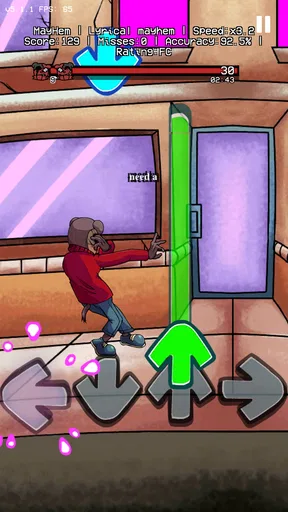
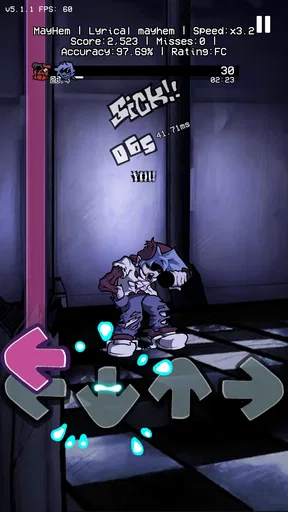
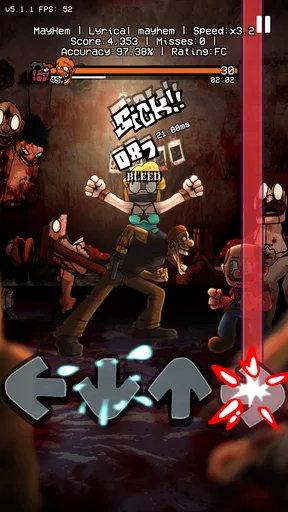
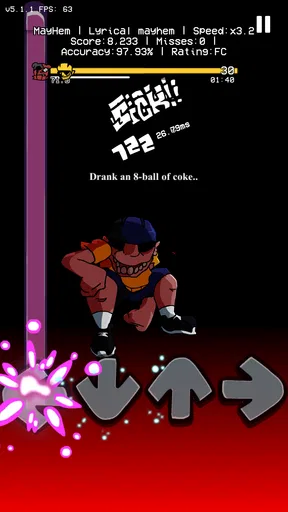
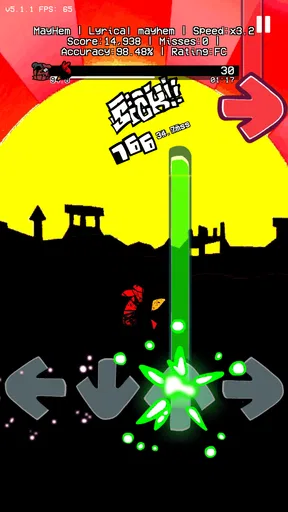
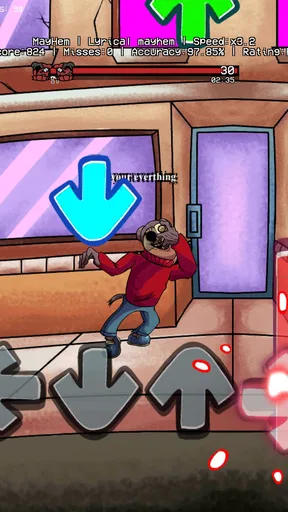
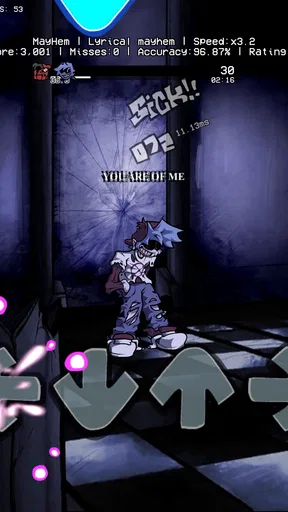
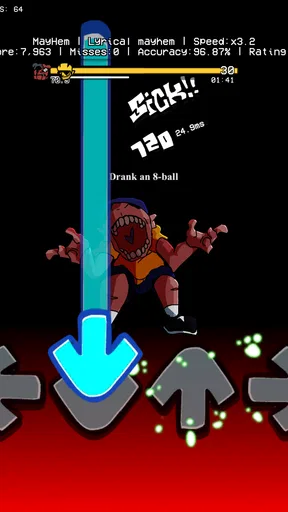
Our Review of Lyrical Mayhem Twiddle Finger
 Analysis by Appyee
I approached Lyrical Mayhem Twiddle Finger as a quick rhythm game rather than a long-form music experience, and that distinction matters. It is built around a Friday-night musical battle and the Lyrical Mayhem mod, so the appeal comes from reacting to the song, keeping your timing steady, and trying to stay composed when the sequence becomes demanding. I found it most enjoyable in short sessions, especially when I wanted something more active than simply listening to music.
This is a free music game from Zang96, aimed at Teen players. It has reached over 100 thousand installs and holds a 4.4 average from around 2.3 thousand ratings, which suggests that the basic idea connects with a sizeable audience. I would not treat those figures as a guarantee that every player will enjoy it, though. Rhythm games are unusually dependent on device response, personal timing, and tolerance for repeating difficult sections.
Getting into the musical battle without unnecessary frustration
The first thing I would tell a new player is not to judge the game by the opening attempt. A rhythm battle can feel awkward when your fingers are still learning where and when to move. If the notes seem to arrive too early or too late, the problem may be your timing rather than your ability. I had better results when I stopped trying to react to each symbol at the last possible instant and instead watched the incoming pattern, then prepared my finger before the target moment.
That small change is especially useful in a mod-focused game such as this one. The Lyrical Mayhem material gives the experience its identity, but it also means that players who already know the style of Friday musical battles may settle in faster than someone completely new to the format. If you usually play slower puzzle games, expect a brief adjustment period. The controls are simple in principle, yet the challenge comes from combining attention, rhythm, and quick correction.
A common sticking point is assuming that a missed note means the whole session has failed. I prefer to treat an early attempt as a reading exercise. Watch which parts of the sequence cause trouble: fast runs, changes in direction, or moments when several inputs arrive close together. Once you know the exact kind of mistake you are making, your next attempt becomes more useful than simply replaying without changing anything.
Simple checks before blaming the controls
Before playing seriously, I recommend closing other demanding apps and making sure the device is not struggling in the background. Rhythm games punish small interruptions more than turn-based games do. A brief slowdown, an incoming notification, or a crowded screen can break concentration at precisely the wrong moment. This is not a special trick for winning; it is just a sensible way to give the game a stable environment.
It is also worth checking that your fingers are not covering the area you need to watch. On a smaller phone, hand position can become part of the challenge. I found it easier to hold the device securely while keeping the active play area visible, rather than gripping it so tightly that my thumb or finger blocked the next cue. If you use a case with raised edges, that may also affect how comfortably you reach the screen, particularly during quick sequences.
The game supports devices running Android 7.1 or later, so compatibility should be considered before downloading. That requirement covers a broad range of phones, but compatibility alone does not promise identical responsiveness on every device. Older hardware may feel less comfortable during demanding moments than a newer phone with a more responsive display. If the game opens but the input feels inconsistent, compare the experience after restarting the device and playing with fewer apps active.
How I would prepare for a first proper session
I would begin with clean hands, a comfortable grip, and a quiet place where I do not have to divide attention between the screen and another task. That sounds basic, but rhythm play depends on repetition. If I am checking messages or listening for someone at the same time, I tend to miss notes and then blame the game unfairly.
For a first run, focus on learning the visual flow rather than chasing a perfect result. Keep your eyes slightly ahead of the current input. Looking only at the note you are pressing makes the next one feel surprising, while scanning forward gives you time to prepare. This approach also helps reveal whether the difficulty comes from speed or from unfamiliar patterns.
Another useful habit is to use short practice blocks. I would rather make several focused attempts with a pause between them than play continuously while frustration builds. When I lose concentration, my hands become tense and my timing gets worse. A brief break can be more valuable than forcing another attempt immediately.
Recovering when a run starts to fall apart
One of the more practical skills in this type of game is recovering from a mistake. After missing an input, I try not to chase it with a frantic movement. The next cue is usually more important than the one already lost. Reset your attention to the upcoming pattern, relax your hand, and continue with the rhythm. Panicking after one error often turns one miss into several.
If the same passage repeatedly causes trouble, change your goal for that section. Instead of trying to complete the whole battle, concentrate on recognizing the lead-in to the difficult moment. Listen to the musical phrasing, watch the visual sequence, and identify the point where your timing begins to drift. Even without turning the session into formal practice, isolating the cause makes improvement more deliberate.
I also found that alternating between confident and difficult sections can keep the experience from becoming exhausting. A successful run through a familiar passage restores some rhythm and confidence before another demanding attempt. This is more effective for me than repeatedly attacking the hardest moment while becoming increasingly tense.
If the screen appears to register touches inconsistently, first repeat the same input pattern slowly and observe whether the issue follows your finger or the game. If the problem appears only during rushed sequences, it may be an accuracy issue. If it happens during simple, well-spaced inputs as well, restart the game and test again before deciding that the controls are unreliable.
Separating game difficulty from device or environment problems
Not every poor result comes from the app. Touchscreens can behave differently depending on moisture, screen protectors, cases, and the way the phone is held. A slightly thick protector or a finger landing near an edge may make quick input feel less precise. I would test the game under comfortable, repeatable conditions before making a final judgment.
Sound can influence timing too. If you are playing in a noisy room, the musical cues may be harder to follow, even when the visual prompts are clear. On the other hand, if the audio is delayed or interrupted, reacting by ear becomes confusing. I would compare a quiet session with a normal one and pay attention to whether the difficulty changes with the environment.
Notifications are another easy source of disruption. A banner appearing over the play area can steal attention, while a vibration can break the rhythm of your hand. For a serious attempt, I prefer using a distraction-free setting on the phone. This does not change the game itself, but it makes the result more representative of its actual performance.
It is equally important to distinguish a difficult chart from a technical fault. If the same sequence is consistently hard but still responds predictably, that is probably challenge by design. If the response varies randomly during simple sections, troubleshooting the device makes more sense than repeatedly replaying the level. Restarting the app, freeing some device resources, and checking the screen surface are safe first steps that do not require changing anything complicated.
What makes this a useful alternative to ordinary music apps
Compared with a standard music player, this game asks me to participate instead of simply listening. That makes it a better choice when I want a quick interactive break or a way to test my timing. It is also more focused than a broad collection of casual games because the musical battle is the central activity, not a background theme added to another genre.
Compared with rhythm games that emphasize a large catalog, deep customization, or long progression systems, this experience feels more approachable as a compact session. That simplicity can be a strength: I can start playing without first learning a complicated interface. The trade-off is that players looking for extensive personalization, a broad music library, or a highly detailed long-term progression system may prefer a different rhythm title.
The Friday battle presentation gives it a recognizable personality, while the Lyrical Mayhem mod provides the specific flavor that fans of this style may be seeking. I would recommend it to someone who enjoys timing challenges, animated musical confrontations, and replaying a section until their hands finally match what their eyes and ears are telling them.
Who should install it, and who should skip it
This is a good fit for players who want a free rhythm game for short breaks, especially if they enjoy learning patterns through repetition. It also suits people who like games where improvement comes from personal timing rather than collecting equipment or building a character. The Teen content rating is worth keeping in mind for families deciding whether it is appropriate for a younger player.
I would be more cautious about recommending it to someone who dislikes repeated attempts or becomes annoyed by small timing errors. Rhythm games can feel demanding even when the controls are straightforward. It is also not my first choice for someone seeking a relaxed music-listening experience, because the point is to interact with the track rather than let it play passively.
Players with older or less responsive phones should try it with realistic expectations. The minimum operating system is Android 7.1, and the current version is 1.5, but a supported system does not remove the practical differences between devices. If precise touch response is essential to your enjoyment, test the game in a calm setting before investing much time in difficult sections.
My everyday use case
For me, the best scenario is a short evening session after finishing routine tasks. I can play a few attempts, notice one pattern that needs work, and stop before the game turns into a source of irritation. That makes it easier to appreciate the musical side without pretending that every attempt will be smooth.
It can also work during a brief break when I want something more engaging than scrolling. I would not play it while commuting in a crowded place or during any situation where the phone may be interrupted, because concentration and stable handling matter. The game rewards a small amount of preparation, so it is better suited to a focused pause than to distracted multitasking.
One practical tip is to decide what success means before starting. Sometimes I aim to finish a section; other times I focus only on surviving a difficult transition with fewer mistakes. That prevents the rating or outcome of one attempt from becoming the only measure of progress. In a timing game, recognizing a pattern you previously missed is genuine improvement, even if the final result is not perfect.
My final view after testing the experience
The strongest reason to try it is its direct, focused rhythm challenge. Lyrical Mayhem Twiddle Finger does not need a complicated premise to be engaging: the musical battle, the mod identity, and the pressure of matching the sequence are enough to create a clear loop. I enjoyed it most when I treated each attempt as a chance to improve one specific weakness rather than expecting immediate mastery.
Its limitations are tied to the same design. A player who wants a deep music platform may find it too narrow, while someone sensitive to touch delay or repeated failure may lose patience quickly. The experience also depends heavily on a suitable device, a clear screen, and a distraction-free environment. Those are not reasons to reject it, but they are important when judging a rhythm game fairly.
Since it is free, I think it is easy to justify trying if you already enjoy musical timing games or the Friday battle style. I would download it with the expectation of short, repeatable sessions rather than a broad all-purpose music app. After giving the controls a fair test, checking the phone environment, and learning to recover from missed notes, I found a compact game with enough character to keep me returning for another attempt.
My recommendation is therefore selective but positive: try it if you want an accessible musical challenge built around Lyrical Mayhem, and skip it if you are looking for passive listening, extensive customization, or a large-scale progression experience. For the right player, its straightforward format is exactly what makes it enjoyable.
Verdict
Strengths of Lyrical Mayhem Twiddle Finger
- Catchy rhythm gameplay makes short sessions fun and easy to replay.
- Distinctive lyrical theme gives the game a memorable identity.
- Simple controls are approachable for casual players.
- Increasing challenge keeps experienced players engaged.
- Works well for quick entertainment during commutes or breaks.
Limitations of Lyrical Mayhem Twiddle Finger
- Some levels may feel repetitive after extended play.
- Fast sections can be difficult on smaller phone screens.
- Progression may feel limited for players seeking deeper content.
- Mistakes can become frustrating when songs speed up.
- Ads or optional purchases may interrupt the overall experience.
Similar Picks in This Category
View All
Tiles Hop Music & Ball Game
AMANOTES PTE. LTD.4.3

Magic Tiles 3™ - Piano Game
AMANOTES PTE. LTD.4.6

Real Piano
Bilkon3.7

Piano Game: Classic Music Song
Dream Tiles Piano Game Studio4.0

Smash Colors: Music Ball Rush
BADSNOWBALL HONGKONG LIMITED4.2

Piano Music Go-EDM Piano Games
Joy Journey Music Games4.5
Frequently Asked Questions
What is Lyrical Mayhem Twiddle Finger?
Lyrical Mayhem Twiddle Finger is a rhythm-based music game centered on timing, quick reactions, and animated musical battles. Players follow notes and prompts on screen while trying to match the beat of each song. Its appeal comes from combining catchy tracks, colorful characters, and progressively more demanding challenges in a format that is easy to understand but can become difficult to master.
How do you play Lyrical Mayhem Twiddle Finger?
Gameplay generally involves tapping, holding, or swiping at the correct moment as musical notes reach their targets. Accurate inputs build your score and help maintain a combo, while missed notes reduce performance. Before downloading, players should be comfortable with fast-paced controls, because later stages can require concentration, quick reflexes, and consistent timing rather than simply tapping randomly along with the music.
Is Lyrical Mayhem Twiddle Finger suitable for beginners?
Yes, the game is approachable for beginners because its basic controls are straightforward and the early songs provide an opportunity to learn the note patterns. However, the difficulty can increase noticeably as new tracks, opponents, or faster sequences appear. New players may need several attempts to improve their timing, especially if they are unfamiliar with rhythm games or playing on a smaller phone screen.
Does Lyrical Mayhem Twiddle Finger require an internet connection or include in-app purchases?
The exact online requirements and purchase options may depend on the version available through the Android or iOS store. Some features, advertisements, updates, or downloadable content may require an internet connection, while core gameplay could be available offline. It is worth checking the store listing for current information about ads, optional purchases, privacy permissions, and whether progress is synchronized between devices.
What should I check before downloading Lyrical Mayhem Twiddle Finger?
Before downloading, check that your device meets the listed operating-system and storage requirements, since rhythm games may need enough space for music, graphics, and updates. Also review the latest screenshots, ratings, privacy details, and developer information. Players should confirm that the available music and visual style match their preferences, and remember that performance may vary depending on the phone or tablet model.
Play our best games!


